

It’s all too easy for those with online businesses to simply ignore the changing world around them and believe that their current approach is the best and will continue to be effective.
This is actually a pretty normal response when people are unsure what the future holds and are reticent to change the ways they’ve been doing business out of a (misplaced) fear that change will rock the boat and cause them to lose the little business they’ve been clinging to.
But for those who are willing to learn and alter the old methods and tactics to suit a much more integrated and technologically proficient world, the sky is the limit.
Here, we are going to explore how it’s possible to unlock, rather than reduce, value by getting to grips with the incredible digital advancements that have completely upended how we live, work, and play.
What Does “Smarter Digital Understanding” Mean?
Before we travel too far into the weeds, it’s worth taking a step back to explore what we actually mean when discussing this topic.

In essence, you can narrow the term “digital understanding” in the context of online business to a range of data points that can include everything from how your customers behave when using an app or website to their preferred methods of payment.
By tuning into various metrics such as these, it’s possible to gain a far more rounded idea of your customers as well as ways to develop a far more satisfying experience that entices new users in while converting them more effectively.
The old ways tended to involve using slightly less nuanced tactics to funnel as many people to a product or service as possible.
But by opting to work smarter and opting to use Agentic Analytics Tools that help to segment customers more effectively, it’s now possible to personalize the experience of each and every customer that graces your digital storefront.
And, seeing as the name of the game has always been to make things as personalized as possible with as little effort as possible, these new tools and processes can make a tremendous difference.
While analytics has been around for some time already, what has emerged in recent years is AI, which has caused a huge paradigm shift in how we collect and parse data, and also the way in which customers interact with the internet and the various digital platforms that make up most people’s digital lives.
The Rise Of Agentic Digital Intelligence
For businesses that want to harness not just the latest and greatest tech, but the technology that actually moves the needle, they must begin implementing agentic intelligence into their stack.
This is where platforms utilize a range of features that are designed to help companies optimize and ultimately manage the digital experience of their customers.
When discussing agentic AI, what we are referring to isn’t just the large language models that we have all come to know and use (although they are certainly a part of it), but also more conventiaonla aspects like machine learning that lal come together to assist business owners in their ultimate pursuit to entice, engage and convert all those who enter their domains.
At its heart, this intelligence combines agentic AI’s autonomy with digital telemetry (aka user behavior data) in the following ways:
| Component | Description | Example |
| Perception and observation | By continuously monitoring in numerous ways (sessions, device usage, behavioral patterns, etc), we can figure out how different users interact with different elements and make changes and updates to ensure a more personal experience. | Tracking “rage clicks” on a mobile payment form to identify frustration spikes. |
| Reasoning and planning | Just knowing that a user is interacting in certain ways is only part of the puzzle. You need to understand why they are taking specific actions if you’re to make a difference. | You might detect that some customers are dropping away at the checkout because your payment options don’t reflect the wide array of options that exist. |
| Action | Once you know where you stand and what you need to improve, you can put your findings into action. | Deploying a promo code for customers who have abandoned their carts out of frustration to entice them back to your recently rectified cart process. |
| Reflection | Any marketer worth their salt won’t stop at simply implementing new processes. They will monitor progress and check what’s working and what might need altering. | An update might be so successful that you can roll it out to different products or processes. |
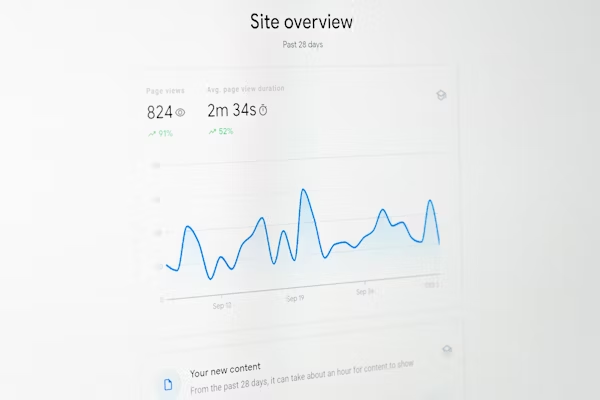
The Organizational Impact Beyond Revenue
Although most businesses will actually be aware that they need to generate enough revenue not just to survive and pay the bills, but also to make the entire endeavor worthwhile, there are organizational impacts that can have a huge impact.
- Product and engineering: Using this form of analytics, you can reduce the time it takes to remedy customer-related bugs in your systems or products. The time saved will reduce user frustrations and go a long way in showing that you’re reactive to the needs of your customers.
- Customer support: In a similar vein to the previous point, you can speed up the time it takes to process and fix customer issues. In fact, because this approach is proactive rather than reactive, you will dramatically reduce complaints and improve the user experience overall.
- Marketing: Real-time personalization triggers based on detected struggles go a long, long way in ensuring that you keep your users onsite and more likely to convert.
Challenges And Considerations
It’s not all rose-tinted glasses when it comes to using the latest and greatest tools, but with the right approach, you ought to be better placed to figure out the pinch points and come up with solutions that fit your specific enterprise.
Some of the most significant challenges you must consider include (but are certainly not limited to):
- Data quality and volume requirements.
- Ethical considerations (concerning the acquisition and use of collected data).
- Convincing your teams to adopt newer practices.
- Scaling modern techniques across your organization.
When you take the proactive step of choosing to understand the data you acquire more acutely, your business is far more likely to blossom in what many consider to be a challenging modern environment for online business.
As long as you understand what tools to use and how to use them most effectively, the sky is the limit in how much you can improve the process for your team and customers.